Emerging from the dead of winter, March 17th serves as a welcome sign of spring—a day when the world is swept into a tidal wave of emerald.
To the casual observer, it is a celebration of Irish heritage and public revelry.
However, beneath the green beer and “St. Paddy’s” kitsch lies a complex narrative of a Romano-British diaspora, religious reform, and an evolution shaped more by the immigrant experience than by the island of Ireland itself.
Historically, this day was a somber religious holy day of obligation for the teaghlach (household) and the clann (family).
In the Middle Ages, shops were shuttered and families attended church to honor the arrival of Christianity. The modern “party” culture actually originated as a one-day reprieve from the rigorous fasting of Lent.
For twenty-four hours, the proscribed Lenten restrictions were lifted, allowing the faithful to “drown the shamrock” before returning to their penance.
The “Irish” Patron Saint was Actually a British Immigrant

In a striking historical irony, the foremost symbol of Irish identity was an outsider. Born Maewyn Succat in Roman Britain during the fourth century, the man we know as Saint Patrick was a product of the Romano-British elite.
His comfortable life was shattered at sixteen when he was kidnapped by Irish marauders and sold into slavery in Gaelic Ireland.
For six years, he labored as a shepherd slave, a period of captivity where he found a profound religious calling. After escaping back to Britain, he followed a vision beckoning him to return to the land of his former captors as a missionary.
He took the name Patrick and dedicated his life to a mission that sought to synthesize indigenous Gaelic culture with Christian iconography.
“In his autobiography Confessio (The Declaration), Patrick wrote about converting the Irish to Christianity while building schools and monasteries along Ireland’s northern-west coast.”
Why Blue was the Original “Emerald” Hue

The mandate to wear green is a relatively modern invention; for centuries, Saint Patrick was depicted in blue.
This color was long associated with the English-imposed structures of Irish sovereignty. In 1541, King Henry VIII granted Ireland a coat of arms featuring a harp on a blue field.
By 1783, King George III had established the Order of St. Patrick, a chivalric order whose official color was a specific shade of sky blue.
The transition to green was not a fashion choice, but a radical act of political defiance.
Nationalist groups, most notably the Society of United Irishmen in the 1790s, adopted green as a rejection of British “royalist blue.” This republican iconography reclaimed the landscape itself as a symbol of sovereignty.
By the time William Drennan coined the phrase the “Emerald Isle” in his 1795 poem, the color had transitioned from a mere landscape feature into a potent symbol of an “unconquered soul.”
The “wearing of the green” became a subversive act for which Irishmen were historically persecuted, eventually cementing the color as the primary marker of national identity.
The Parade is a Product of the Diaspora, Not the Homeland

While many believe the St. Patrick’s Day parade is a quintessential Irish tradition, it is actually a Spanish-colonial and North American invention.
While traditionalists point to Boston (1737) and New York City (1762), historical records indicate the first parade actually occurred in St. Augustine, Florida, in 1601.
These early processions predated celebrations in Ireland by centuries; the first parade in the homeland did not occur until 1903 in Waterford.
For the Irish diaspora, these parades were essential tools for negotiating political and cultural space within the American urban landscape.
Amidst sectarian divisions and marginalization, the parade allowed the Irish community to demonstrate its strength, unity, and growing influence.
“Today New York’s Fifth Avenue parade is America’s most famous, largest and rowdiest Saint Paddy’s Day tradition, serving as a vital bridge for the community.”
Science and Metaphor: The Truth Behind the Snakes and Shamrocks

The “carnival” atmosphere of the modern holiday is fueled by persistent myths that require a historian’s deconstruction:
- The Snakes: Post-glacial Ireland was never home to snakes. The legend is a theological metaphor for Patrick’s role in “cleansing” the island of paganism and the Druidic “serpent” symbols.
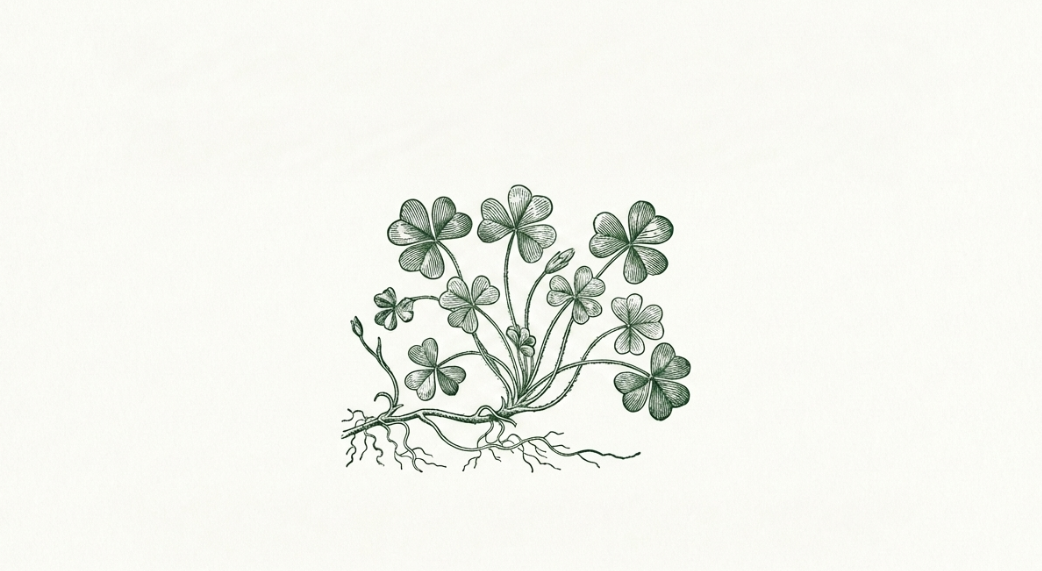
- The Shamrock: While Patrick reportedly used the three-leaved plant to explain the Holy Trinity (drawing on the existing Gaelic concept of the triskele), he never actually mentioned the plant in his writings. The custom of “drowning the shamrock”—placing the plant in a cup of whiskey for a final toast—bridged the gap between the religious symbol and the holiday’s drinking culture.
- The Leprechauns: The “pinching” legend and the neon-clad leprechaun are largely American inventions, derived from 19th-century caricatures that have since been commercialized into a secular mascot.
The Immigrant Evolution of the Traditional Meal

The “traditional” meal of corned beef and cabbage is a masterpiece of immigrant adaptability rather than Irish history.
In Ireland, the celebratory meal centered on boiled bacon and potatoes. However, in the 19th-century American urban landscape, Irish immigrants found bacon prohibitively expensive, while beef was readily available.
This led to a cultural fusion: Irish families sourced affordable, tough cuts of beef from their Jewish-American neighbors and used brining—or “corning”—techniques to tenderize the meat.
This shift highlights how Irish identity was negotiated through necessity, creating a new tradition that eventually traveled back across the Atlantic.
A Global Spectacle: From the Chicago River to Outer Space
In the 21st century, the holiday has undergone a massive re-branding. No longer just an ethnic festival, it is a global marketing phenomenon:
- The Chicago River: Since 1962, the city has used orange powder to dye the river emerald green—a display that transformed a local stunt into an international bucket-list event.
- Global Greening: Tourism Ireland’s initiative now sees over 300 landmarks, from the Sydney Opera House to the Sky Tower in Auckland, illuminated in green, rebranding a small island nation for a globalized audience.
- Orbital Celebrations: The festival reached its zenith in 2011 and 2013, with astronauts performing Irish music on the International Space Station, proving the diaspora’s reach is truly universal.
While some dismiss these displays as “Plastic Paddyness”—a commercialized appropriation of culture—from a historian’s perspective, they represent the incredible resilience and soft power of the Irish people.
“Since 2010, famous landmarks have been lit up in green as part of Tourism Ireland’s ‘Global Greening Initiative,’ with over 300 landmarks in fifty countries participating.”
A Legacy of Resilience
The journey of St. Patrick’s Day is a testament to the power of cultural evolution.
It is a narrative that began with the trauma of a teenage kidnapping and culminated in a global festival that spans the breadth of the planet.
The holiday we celebrate today was not built by those who stayed on the island, but by the diaspora who carried a fractured identity across oceans and rebuilt it into a global phenomenon.
In a world of global greening and commercialized revelry, how can we better honor the actual heritage of the clann and teaghlach that St. Patrick sought to serve?
Leave a Reply