

A few months ago, a friend asked me a question.
“If you lost everything tomorrow, what business would you start?”
No audience.
No money.
No network.
No shortcuts.
Just a laptop and an internet connection.
It’s a fascinating question because most successful people give terrible advice.
They tell you to “follow your passion.”
Or “build what you love.”
Or some other Instagram quote that sounds profound but doesn’t help pay rent.
If I were starting from zero in 2026, I’d do something much less romantic.
I’d follow demand.
Because demand is what pays the bills.
And thanks to AI, there has never been a better time to build a business with almost no resources.
Here’s exactly what I would do.
Step 1: Forget Ideas. Look for Problems.
Most people start with an idea.
I start with a problem.
A few years ago, I met a guy making over $500,000 a year helping dentists get more Google reviews.
That’s it.
No revolutionary technology.
No venture capital.
No Shark Tank appearance.
Just solving a painful problem.
The internet makes people believe successful businesses are complicated.
Most aren’t.
They’re boring solutions to expensive problems.
That’s where I’d start.
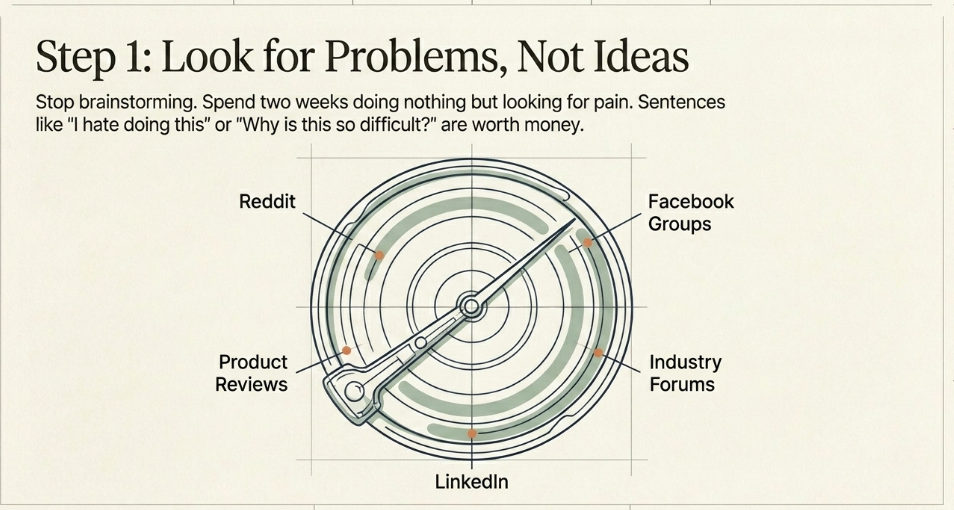
I’d spend two weeks doing nothing but looking for pain.
Places I’d look:
- Facebook Groups
- Industry forums
- LinkedIn comments
- Product reviews
I’d look for people saying things like:
“I hate doing this.”
“Why is this so difficult?”
“There has to be a better way.”
Those sentences are worth money.
Step 2: Pick a Market, Not a Product
One mistake I made early in my career was obsessing over products.
Experienced entrepreneurs obsess over markets.
Products change.
Markets last.
For example:
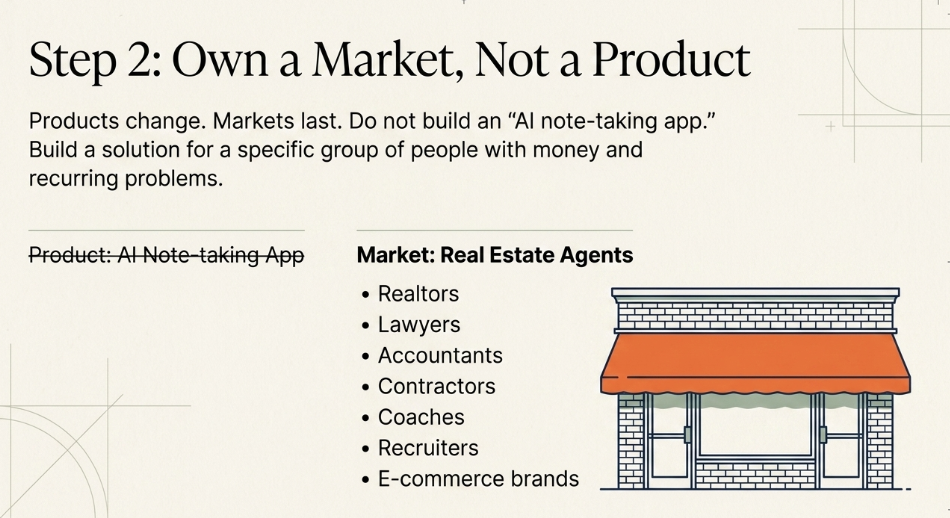
Bad market:
“AI note-taking app.”
Good market:
“Real estate agents.”
The first is a product.
The second is a group of people with money and recurring problems.
I’d rather own the attention of a market than own a clever piece of software.
So I’d choose one audience:
- Realtors
- Lawyers
- Accountants
- Contractors
- Coaches
- Recruiters
- E-commerce brands
Then I’d learn everything about them.
Step 3: Build an Audience Before a Product
This is probably the most important lesson I’ve learned.
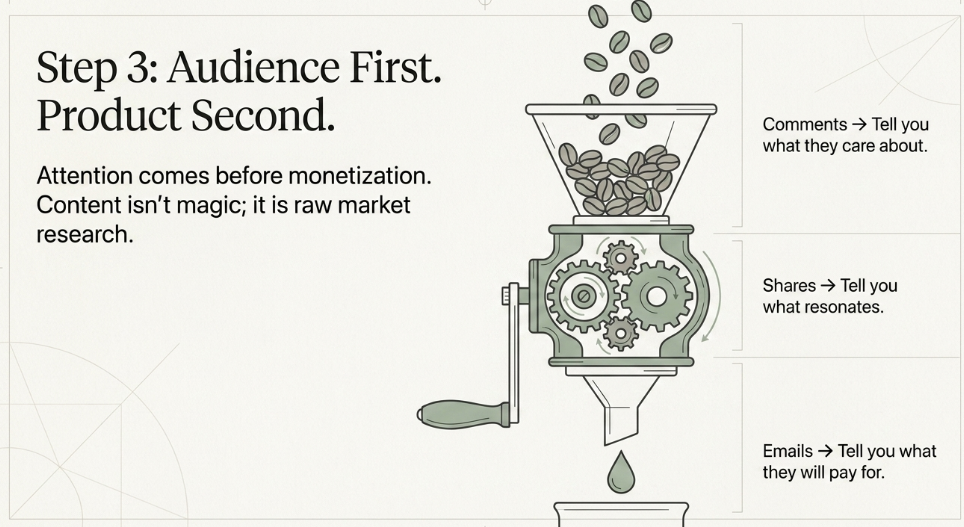
Attention comes before monetization.
Not after.
If I were starting over, I’d spend my first 90 days creating content.
Every day.
No exceptions.
Not because content is magical.
Because content is market research.
The comments tell you what people care about.
The shares tell you what resonates.
The emails tell you what they’ll pay for.
Most founders build first and ask questions later.
I’d do the opposite.
I’d build an audience first.
Then let the audience tell me what to build.
Step 4: Use AI as Employees
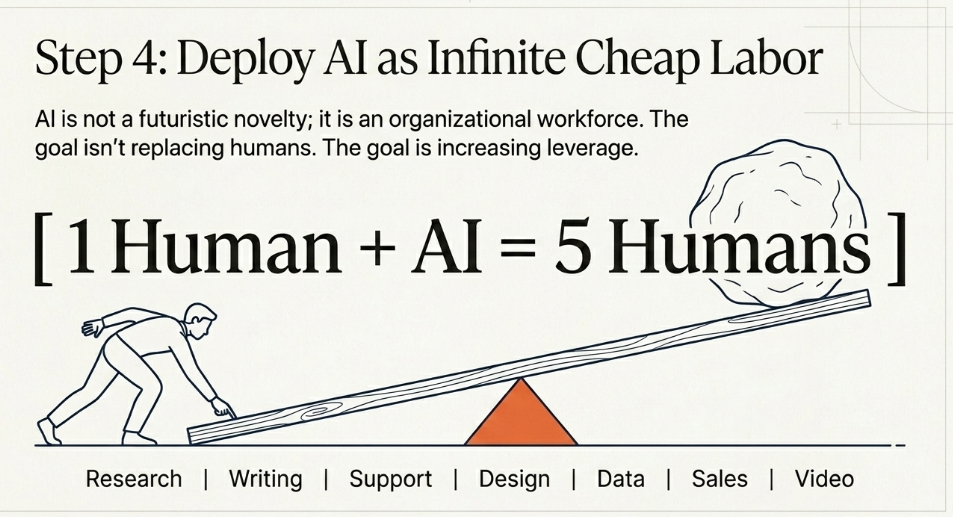
People talk about AI like it’s some futuristic technology.
I think about it differently.
It’s labor.
Cheap labor.
If I were starting from scratch, I’d use AI for:
- Research
- Writing
- Customer support
- Graphic design
- Data analysis
- Sales outreach
- Video editing
Ten years ago you’d need a team.
Today you need software.
The goal isn’t replacing humans.
The goal is increasing leverage.
One person with AI can now do the work of five.
That’s a massive advantage.
Step 5: Sell a Service First
This part surprises people.
If I started from zero, I wouldn’t build software.
I’d sell a service.
Why?
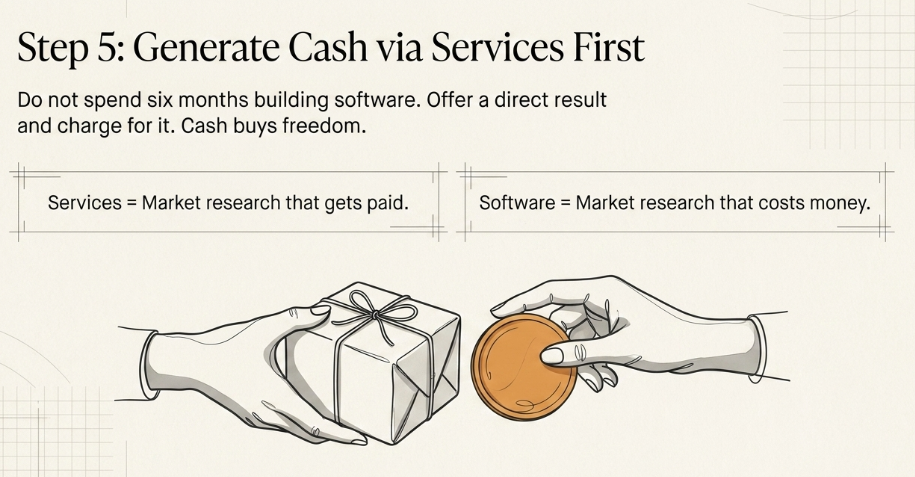
Because services generate cash quickly.
And cash buys freedom.
Let’s say I discover contractors struggle with lead generation.
I wouldn’t spend six months building software.
I’d simply offer:
“We’ll get you more leads.”
Then I’d charge for it.
The service teaches me exactly what customers need.
Only after that would I consider software.
Services are market research that gets paid.
Software is market research that costs money.
Step 6: Productize the Service
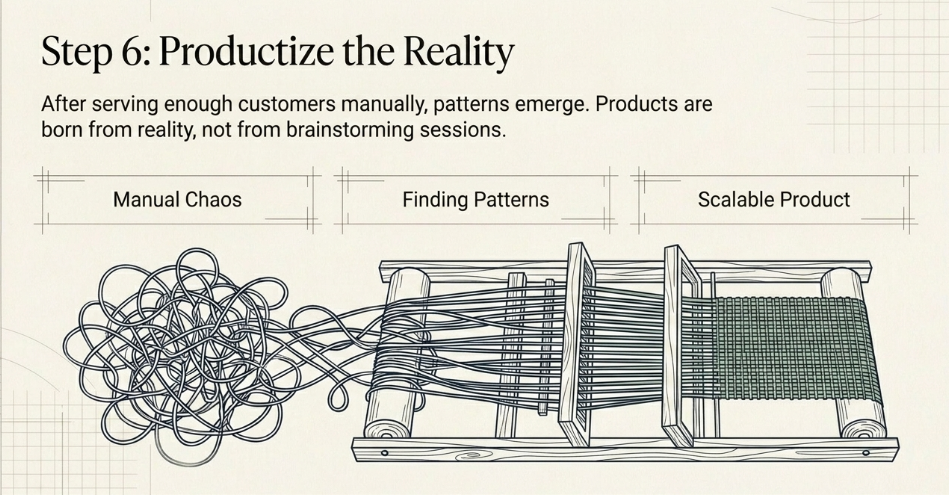
After serving enough customers, patterns emerge.
You notice the same tasks happening repeatedly.
That’s where products come from.
Not brainstorming sessions.
Reality.
The best software businesses often start as services.
The founder learns the pain firsthand.
Then builds tools to solve it.
That’s much safer than guessing.
Step 7: Create a Newsletter
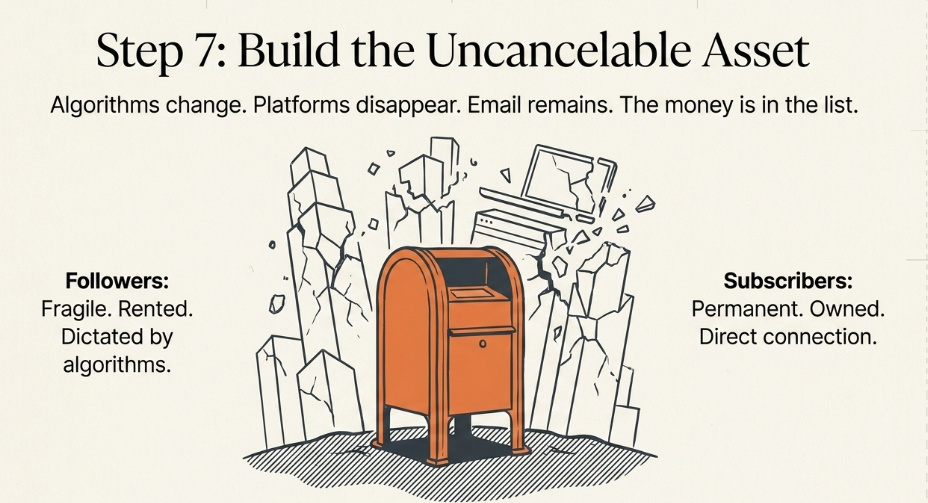
If I could only build one audience asset, it’d be an email list.
Not social media.
Not followers.
Not subscribers.
Email.
Algorithms change.
Platforms disappear.
Email remains.
Every successful internet entrepreneur I know eventually comes to the same conclusion:
The money is in the list.
So from day one I’d collect emails.
Even if only ten people joined.
Those ten people matter.
Step 8: Stay Boring Longer
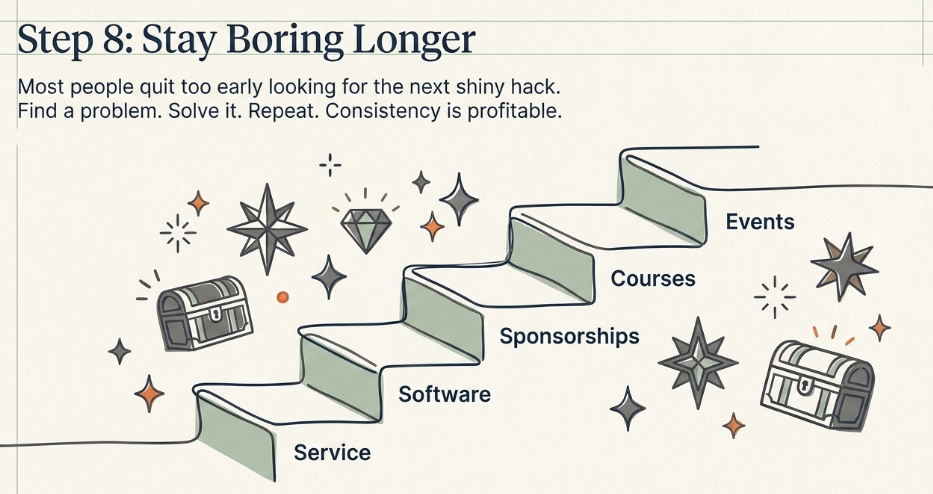
This might be the hardest part.
Most people quit too early.
Not because they fail.
Because they’re bored.
They keep looking for the next shiny opportunity.
The next trend.
The next hack.
The next secret.
But business isn’t usually complicated.
Find a problem.
Solve it.
Repeat.
For years.
The founders making millions often look boring from the outside.
That’s because consistency isn’t exciting.
It’s profitable.
What Business Would I Actually Start?
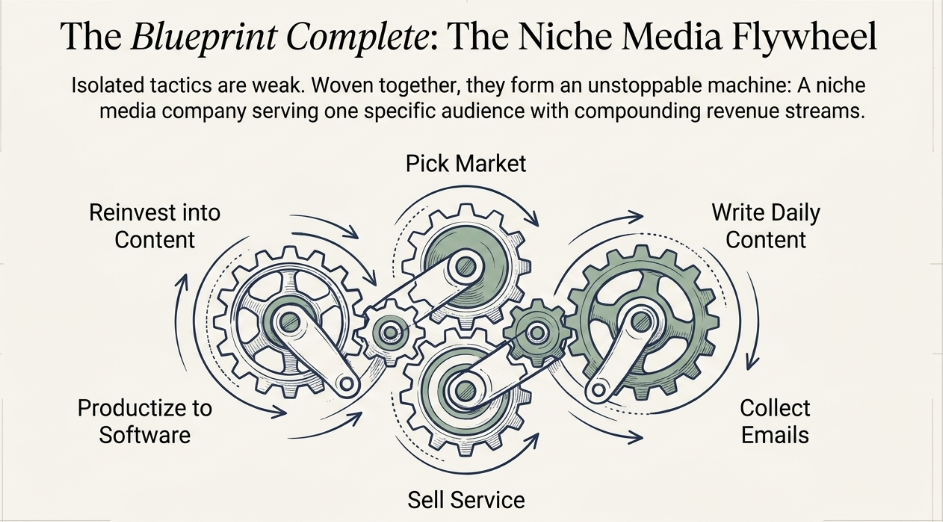
If I had to choose today, I’d probably build a niche media company.
Specifically:
A newsletter serving one valuable audience.
Something like:
- Local business owners
- Contractors
- Healthcare practices
- Recruiters
- Financial advisors
I’d publish content daily.
Build trust.
Learn the market.
Sell services.
Then software.
Then sponsorships.
Then courses.
Then events.
One audience.
Multiple revenue streams.
That’s the playbook I’d bet on.
Final Thoughts
People think successful businesses start with brilliant ideas.
Most don’t.
They start with observation.
Someone notices a problem.
Solves it.
Then keeps solving it better than everyone else.
The biggest advantage in 2026 isn’t AI.
It isn’t capital.
It isn’t even technology.
It’s attention.
If you can earn attention and keep it, you can build almost anything.
And that’s exactly where I’d start.


[…] I had to start from zero […]