
A few years ago, building a website required one of three things.
You learned to code.
You hired someone who could code.
Or you spent several frustrating weekends watching YouTube tutorials while pretending you understood what CSS was doing.
Today, the starting point is much simpler.
You can describe the website you want.
AI creates the first version.
You edit it.
You publish.
That doesn’t mean websites have become completely automatic.
They haven’t.
A bad idea with a beautiful website is still a bad business.
But the cost of testing an idea has dropped dramatically.
And that is a big deal.
If I had an idea for a business today, I wouldn’t spend six months building the perfect website.
I’d build the simplest version possible.
Get it online.
Show it to real people.
Then improve it based on what they actually do.
Here are the AI website builders I’d look at first.
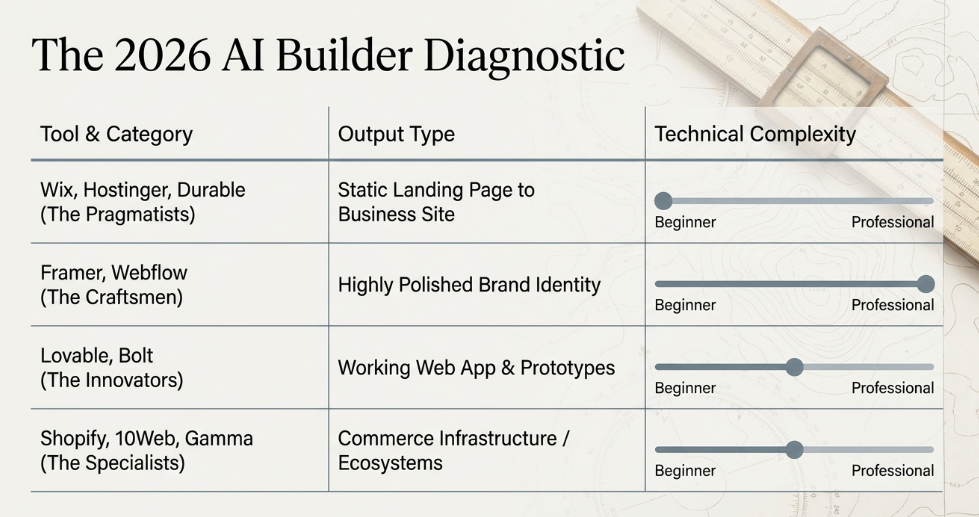
The Short Answer
If you’re in a hurry:
Best Overall: Wix AI
Best for Beginners: Hostinger Website Builder
Best for Design: Framer
Best for AI-Generated Apps: Lovable
Best for Rapid Prototyping: Bolt
Best for Professional Websites: Webflow
Best for E-Commerce: Shopify
The right answer depends on what you’re building.
Let’s break it down.
1. Wix AI
Best Overall
Wix has been building website software for a long time.
That matters.
AI is useful.
But the rest of the website builder still needs to work.
Wix AI helps you create a website by describing what you want.
It can generate the structure, content, and design direction.
Then you can edit everything visually.
That’s the part I like.
You don’t have to accept whatever AI creates.
You can actually take control.
Best For
- Small businesses
- Freelancers
- Service businesses
- Entrepreneurs
- Beginners
The biggest advantage is that it gives you a relatively simple path from idea to published website.
That’s usually what people want.
Not a computer science degree.
2. Framer
Best for Design
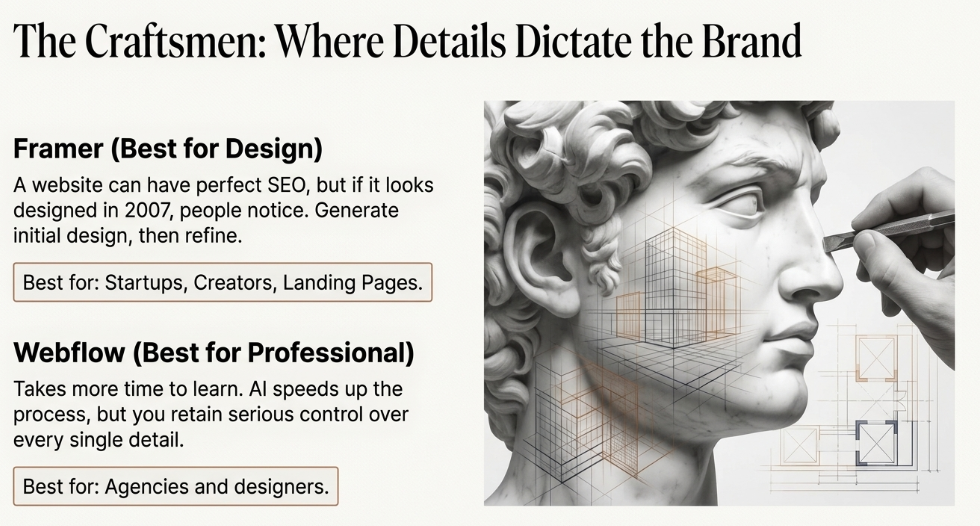
Framer is for people who care about how the website looks.
And that is increasingly important.
A website can have perfect copy, perfect SEO, and perfect functionality.
If it looks like it was designed in 2007, people notice.
Framer is particularly good for modern landing pages and visually polished websites.
You can use AI to generate an initial design, then refine it yourself.
Best For
- Startups
- Creators
- Agencies
- Personal brands
- Product landing pages
If your website is part of your brand, Framer deserves a look.
3. Hostinger AI Website Builder
Best for Beginners
Some people want a website.
They do not want to become website builders.
That’s an important distinction.
Hostinger’s AI tools are designed to make the process simple.
You describe your business.
The system generates a starting point.
Then you customize it.
For a small business owner who wants to get online quickly, that simplicity is valuable.
The best tool is often the one you actually finish using.
4. Lovable
Best for Building Actual Products
This is where things get interesting.
Traditional website builders create websites.
Tools like Lovable can help you create working web applications using natural language.
You can describe what you want.
The AI generates the product.
Then you keep refining it.
This is a huge change for entrepreneurs.
You can test ideas before hiring a development team.
You can build prototypes before raising money.
You can create internal tools without starting a six-month software project.
That’s powerful.
Best For
- SaaS prototypes
- Internal tools
- MVPs
- Startup experiments
The important thing is to remember that a prototype is not necessarily a finished product.
But the distance between idea and prototype is getting much shorter.
5. Bolt
Best for Rapid Prototyping
Bolt is built around a similar idea.
Describe what you want to build.
The AI generates a working version.
Then you tell it what to change.
This is useful for people who have ideas but don’t necessarily have the technical skills to build the first version themselves.
And here’s why that matters.
Before AI, you often had to convince someone else to build your idea before you could find out whether the idea was any good.
Now you can test more ideas yourself.
That’s a meaningful shift.
6. Webflow
Best for Professional Websites
Webflow is more powerful than most beginner website builders.
That also means it can take more time to learn.
For agencies, designers, and companies that want serious control over their website, that’s a good tradeoff.
AI can speed up parts of the process.
But Webflow still gives you control over the details.
And details matter when you’re building a serious brand.
7. Shopify
Best for E-Commerce
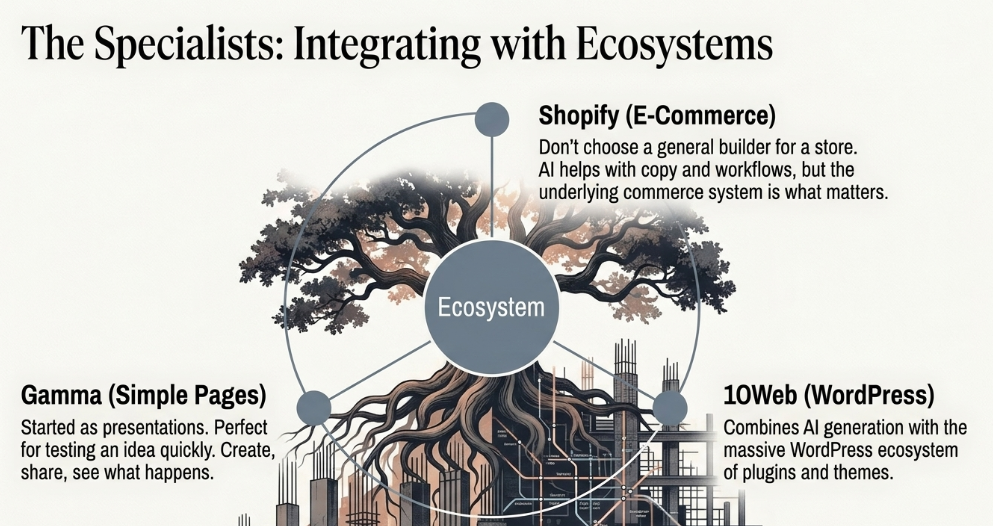
If you’re selling products online, don’t choose a general website builder just because it has a shiny AI feature.
Use a platform designed for commerce.
Shopify has spent years building the infrastructure behind online stores.
AI can help with:
- Product descriptions
- Marketing copy
- Store content
- Customer support
- Business workflows
But the important part is the underlying commerce system.
AI helps you operate the store.
It doesn’t replace the need for a good product.
Unfortunately, there is no AI button labeled “Make people want this.”
I’ve checked.
8. Durable
Best for Service Businesses
Durable is built around a simple promise:
Get a business website online quickly.
That’s useful for:
- Consultants
- Contractors
- Freelancers
- Local businesses
- Service providers
The people who need this usually aren’t trying to build the next global technology company.
They need a professional website.
They need customers to find them.
They need to get on with running the business.
That’s a perfectly good use case.
9. 10Web
Best for WordPress Users
WordPress remains one of the biggest website platforms on the internet.
10Web combines WordPress with AI tools that help generate and manage websites.
That can be useful if you want the flexibility of WordPress without starting completely from scratch.
The advantage here is the ecosystem.
WordPress has an enormous number of plugins, themes, and integrations.
AI simply makes the starting process easier.
10. Gamma
Best for Simple Web Pages and Presentations
Gamma started with presentations and documents.
But its ability to create polished visual pages makes it useful for lightweight websites and landing pages.
This is particularly interesting for people who want to test an idea quickly.
Create a page.
Share it.
See what happens.
You can always build something more complex later.
Which AI Website Builder Should You Choose?
Here’s the simplest way I’d think about it.
If you want a normal business website:
Start with Wix or Hostinger.
If you care deeply about design:
Try Framer.
If you’re building an online store:
Use Shopify.
If you’re testing a software idea:
Look at Lovable or Bolt.
If you’re a professional designer:
Consider Webflow.
If you’re a service business that just needs to get online:
Look at Durable.
The mistake is choosing a tool before deciding what you’re building.
That’s backwards.
First decide what the website needs to do.
Then choose the tool.
The Biggest Mistake People Make
They spend too much time building the website.
I understand why.
Building websites is fun.
You can change the font.
Then the color.
Then the spacing.
Then the button.
Then you spend three hours deciding whether the button should be eight pixels farther to the left.
Meanwhile, nobody has visited the website.
Here’s my rule:
Build version one quickly.
Put it in front of real people.
Watch what they do.
Then improve the parts that matter.
A website is not a painting.
You don’t have to finish it before anyone sees it.
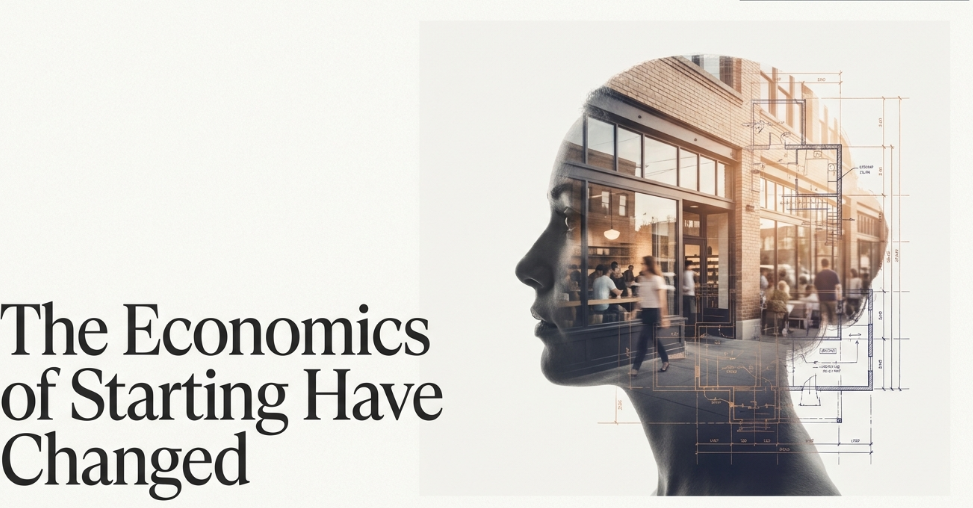
AI Has Changed the Economics of Starting
This is the bigger story.
Starting a business used to require more capital.
You needed:
- A developer
- A designer
- A copywriter
- A marketing team
Now one person can use AI to do a rough version of all four jobs.
That doesn’t mean every entrepreneur should work alone forever.
It means you can get much further before you need to hire.
You can test ideas.
Find customers.
Learn what works.
Then spend money on the things that have already proven themselves.
That’s a much better way to build.
My Advice
If you have a business idea, don’t start by asking:
“Which AI website builder is the best?”
Ask:
“What is the fastest way I can get something useful in front of a real customer?”
Sometimes that’s an AI website builder.
Sometimes it’s a simple landing page.
Sometimes it’s a Google Form and an email address.
The technology is not the business.
It’s just the shovel.
The gold is still in finding something people want.
Final Thoughts on AI Website Builders
AI website builders are getting better.
But their biggest advantage isn’t that they can create beautiful websites.
It’s that they make experimentation cheaper.
You can test more ideas.
Launch faster.
Change direction sooner.
And learn what customers actually want before spending months building something nobody asked for.
That’s the real opportunity.
Don’t use AI to build a perfect website.
Use it to build the first version quickly.
Then let the market tell you what to build next.
That’s a much better business plan.